

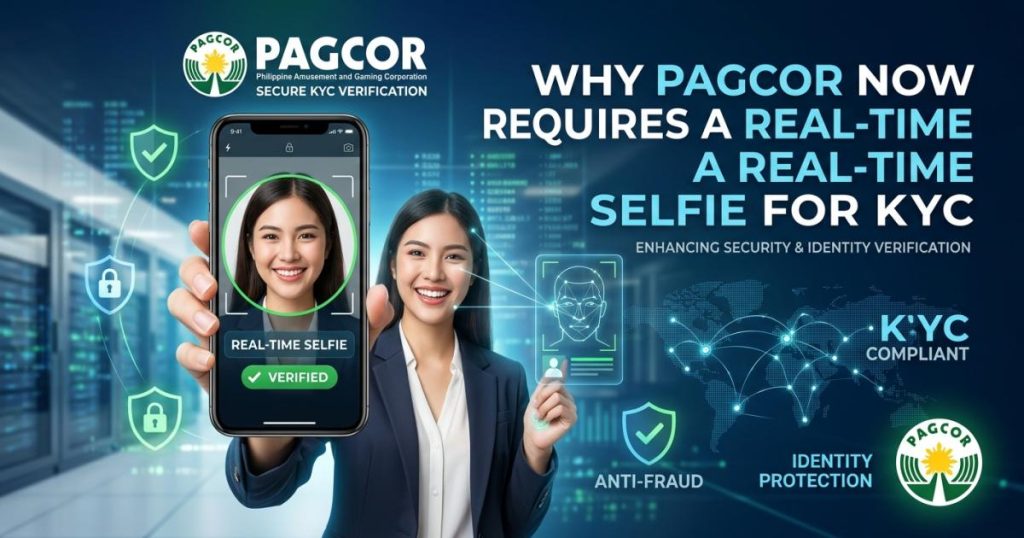
PAGCOR updated its KYC process to require a real-time selfie with an ID, stopping 21+ players in the Philippines from accessing platforms like FBM Play before verification.
What Changed in PAGCOR’s KYC Requirements
The regulatory framework governing online gaming in the Philippines requires operators to maintain exact records of their users. To enforce this standard, the regulatory body updated the mandatory registration steps for all licensed platforms. According to Jessa Mariz Fernandez, an officer from PAGCOR’s Electronic Gaming Licensing Department, the agency successfully closed a gap that previously let players access platforms before identity checks were completed.
Under the updated rules, the initial registration phase requires more than basic data entry. The updated process requires a registrant to submit their full legal name, current contact details, and a valid government-issued ID. Crucially, the process now mandates a real-time selfie taken alongside the submitted ID. This specific addition forces the applicant to prove they are the actual owner of the identification document at the exact moment of account creation.
Prior to this update, many operators relied on legacy systems that permitted users to upload photos directly from their camera rolls or desktop folders. This legacy approach created a blind spot for regulators, as it was impossible to verify when the photo was taken or if the person in the photo was the one operating the device. By mandating a live capture, the Electronic Gaming Licensing Department has modernized the regulatory framework, bringing it in line with international financial sector standards for customer due diligence. This change directly addresses vulnerabilities in older verification methods, where users could upload static, pre-saved images that failed to confirm their physical presence.
Why the Real-Time Selfie Matters
During a Senate hearing, lawmakers scrutinized the effectiveness of existing age and identity verification protocols across the industry. Senators had repeatedly raised concerns about players using borrowed or fake identities to bypass restrictions, specifically the strict 21+ age requirement for legal gambling in the Philippines. Without a live verification component, excluded individuals could easily photograph a relative’s identification card and use it to open an unauthorized account.
During these hearings, it became evident that digital platforms needed to replicate the physical security checks found in land-based establishments. In a physical venue, security personnel visually match a patron’s face to their ID card before granting entry. The real-time selfie replicates this visual confirmation in a remote environment. Borrowed identities are often sourced from family members or friends, making it crucial to verify physical presence rather than just document validity.
A real-time selfie makes it harder to submit someone else’s ID without also being physically present to take the matching photo. By forcing the device camera to capture the user holding the document in real time, the system creates a direct link between the physical person and the legal document. This mitigates the risk of identity theft and ensures that the person registering is indeed the adult authorized by the government ID. The live capture mechanism relies on direct camera access to prevent the uploading of manipulated or stolen photographs, establishing a factual baseline for user accountability and regulatory compliance.
What This Means at Registration
For users signing up on regulated platforms, the order of operations has fundamentally shifted. Verification must now be completed before, not after, a player gains full access to a platform. In the past, some systems allowed a grace period where users could create a basic profile, deposit funds, and navigate the platform while their documents sat in a pending review queue.
This procedural update closes the specific loophole where someone could start playing while verification was still pending. By moving the identity check to the very front of the user journey, regulators ensure that no unauthorized activity occurs on the account prior to approval. Players will find that their accounts remain restricted or completely locked until the real-time selfie and government ID are fully processed and matched.
When a new user initiates the registration process, they must grant the platform’s application or website temporary access to their device’s camera. The system will typically prompt the user to position their face and the government ID within a specific frame on the screen. The image must be clear, well-lit, and free of glare that might obscure the text on the ID. If the live capture is blurry or if the face does not match the ID photograph, the verification will fail, and access will be denied. This immediate feedback loop ensures that only fully compliant accounts proceed to the active phase, protecting the integrity of the platform.
How FBM Play’s KYC Process Works
To comply with these regulatory updates, platforms operating legally in the Philippines have implemented comprehensive data collection systems. FBM Play requires a 13-field identity verification process to ensure every user meets the legal criteria. This thorough data collection aligns with broader anti-money laundering directives and responsible gaming initiatives.
The 13-field identity verification process is designed to build a comprehensive profile of the user, ensuring that all activity on the platform is transparent and traceable. For instance, collecting data on the source of income and nature of work allows the platform to monitor for suspicious financial patterns, fulfilling broader AML obligations. Providing exact permanent and current addresses ensures that the operator can establish legal residency, as gaming regulations vary strictly by jurisdiction.
The mandatory fields for the FBM Play registration process include:
- Full Name: The registrant’s legal name exactly as it appears on their government ID.
- Date of Birth: Used to confirm the applicant meets the 21+ age requirement.
- ID Type: The specific classification of the government document being submitted.
- ID Front and Back Upload: Clear images of both sides of the identification card.
- Selfie with ID: The real-time photograph capturing the user’s face alongside the submitted document.
- Place of Birth: Additional demographic data for background verification.
- Current Address: To establish current residency and contact information.
- Permanent Address: Required for long-term record keeping and compliance.
- Nationality: To determine jurisdictional compliance and eligibility.
- Source of Income: A standard financial compliance metric to track fund origins.
- Nature of Work: Employment details required for ongoing risk assessment.
- Monthly Income Range: Financial data used to monitor appropriate spending and flag unusual activity.
When completing this 13-field process, users must provide an approved form of identification. The accepted IDs include a Passport, Driver’s License, UMID, SSS ID, PhilID, Voter’s ID, Postal ID, and PRC ID. Submitting any of these documents alongside the required real-time selfie ensures the account is verified accurately and securely.
FAQ
Why does PAGCOR now require a real-time selfie for registration?
The real-time selfie proves that the person creating the account is physically present and matches the submitted government ID. This prevents individuals from using stolen or borrowed documents to bypass age and identity restrictions.
What gap did this KYC update close?
The update closed a specific loophole that allowed users to access platforms and begin playing while their identity verification was still pending. Now, identity checks must be fully completed before a player gains full access.
Can I access a platform before completing identity verification?
No, the updated regulations require all identity checks to be finalized prior to granting platform access. Your account will remain restricted until your ID and real-time selfie are verified.
What ID types does FBM Play accept for KYC?
FBM Play accepts several government-issued documents, including a Passport, Driver’s License, UMID, SSS ID, PhilID, Voter’s ID, Postal ID, and PRC ID. These must be submitted alongside a live selfie to complete the 13-field registration.
Responsible Gaming and Age Requirements
Online gaming is strictly regulated in the Philippines and is limited to individuals who are 21 years of age or older. The real-time selfie requirement is a necessary step to enforce this legal age limit and protect vulnerable individuals. Always practice responsible gaming by setting strict limits on your time and spending. If you or someone you know is struggling with gaming-related issues, please seek assistance from professional support organizations.