

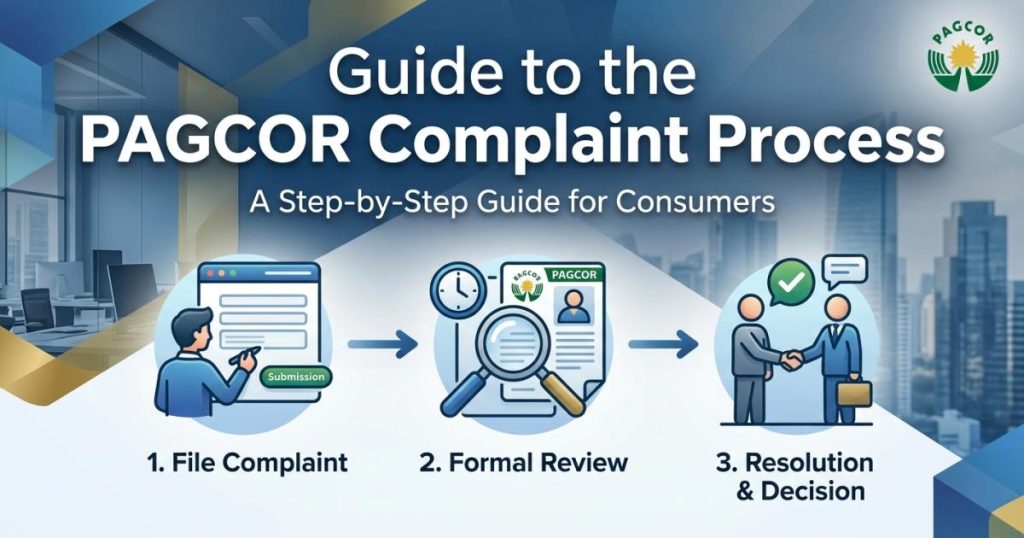
The PAGCOR complaint process allows players to formally report disputes and seek resolution regarding regulated gaming operations in the Philippines.
What Is the PAGCOR Complaint Process?
The Philippine Amusement and Gaming Corporation (PAGCOR) is the primary regulatory body responsible for overseeing both land-based and online gaming operations within the Philippines. As part of its mandate to protect players and ensure the integrity of the gaming industry, the agency provides a formal mechanism for dispute resolution. This system is designed to mediate and resolve conflicts between patrons and licensed gaming operators when internal casino customer service channels fail to reach a satisfactory conclusion.
Engaging with this regulatory framework ensures that players have a centralized, authoritative entity to turn to when they encounter unfair practices, withheld funds, or technical discrepancies. By maintaining a strict oversight program, the regulator ensures that all licensed entities adhere to standard operating procedures, fair play regulations, and responsible gaming protocols. The dispute mechanism is a critical component of this oversight, acting as both a safety net for consumers and a compliance check for operators.
What Are Common Reasons for Filing a Dispute?
Players typically initiate regulatory intervention when they experience significant issues that directly impact their funds or gaming experience. Understanding the common grounds for these disputes can help you determine if your situation warrants regulatory escalation.
- Delayed or Denied Withdrawals: This is the most frequent cause for escalation. It occurs when a licensed operator fails to process a legitimate payout request within the timeframe stipulated in their terms and conditions, often citing endless security checks or providing no explanation at all.
- Unjustified Account Closures: Operators may lock or permanently ban a player’s account and confiscate the remaining balance. While operators have the right to ban players for fraud, doing so without providing evidence of a terms of service violation is a valid ground for a regulatory dispute.
- Bonus and Promotional Disputes: Misunderstandings or alleged unfair application of wagering requirements, promotional terms, or bonus eligibility frequently lead to conflicts. Players may feel that the operator retroactively changed the rules to avoid paying out bonus winnings.
- Technical Glitches and Game Errors: Instances where a slot machine freezes during a bonus round, or a live dealer game disconnects during a winning hand, can result in lost funds. Players rely on regulatory bodies to audit the game logs and ensure the technical failure did not unjustly deprive them of their winnings.
- Self-Exclusion Violations: If a player has formally enrolled in a self-exclusion program for responsible gaming, but the operator continues to send marketing materials or allows the player to deposit and gamble, the operator is in severe violation of regulatory mandates.
How Do You File a Complaint with PAGCOR?
To ensure your case is reviewed efficiently, it is crucial to follow the established procedural steps. Skipping steps or failing to provide adequate preliminary information can result in your case being delayed or dismissed entirely.
- Exhaust Internal Casino Procedures: Before involving the regulator, you must attempt to resolve the issue directly with the operator. Contact the casino’s customer support, escalate the issue to a manager if possible, and wait for their final ruling. Regulators will generally not intervene unless the casino has been given a fair opportunity to address the problem first.
- Gather Comprehensive Evidence: Compile a complete dossier of your interactions with the operator. This should include timestamped screenshots of your account balance, game history, deposit and withdrawal receipts, and all email or live chat transcripts with customer service representatives.
- Complete the Official Documentation: Locate the official dispute resolution or player grievance forms provided by the regulatory body. These forms require precise details about your identity, the operator in question, and the exact nature of your grievance.
- Submit the Formal Claim: Send your completed forms and all supporting evidence to the designated regulatory department. This is typically done via a specific email address dedicated to player grievances or through a physical mailing address for the licensing and regulatory division.
- Cooperate with the Investigation: Once your file is received and an investigating officer is assigned, they may reach out for clarification or additional documentation. Respond promptly and professionally to all requests to keep the investigation moving forward.
What Information Is Required for a Claim?
A well-documented case is significantly more likely to be resolved in your favor. When submitting your grievance, ensure you have the following information meticulously organized and readily available.
- Personal Identification: A copy of a valid, government-issued ID (such as a passport or driver’s license) to prove your identity and verify that you are of legal gambling age.
- Account Credentials: Your exact username, account ID number, and the specific URL or physical location of the casino where the incident occurred.
- Detailed Incident Timeline: A chronological breakdown of events. Include exact dates, times (noting the specific timezone), and the sequence of actions that led to the dispute.
- Financial Records: Bank statements, e-wallet transaction IDs, or credit card statements that prove you made the deposits in question, alongside any pending withdrawal requests shown in the casino’s cashier system.
- Communication Logs: Unedited transcripts of live chats and copies of all email correspondence between you and the operator’s support or security teams.
How Long Does the Investigation Take?
The timeline for resolving a dispute varies significantly depending on the complexity of the case, the responsiveness of the operator, and the current backlog of the regulatory department. Generally, straightforward cases regarding delayed payments where the player has clear evidence can be resolved within 15 to 30 business days.
However, more complex situations may take several months. For example, if a dispute involves allegations of software manipulation, technical glitches, or complex bonus fraud, the regulator may need to involve third-party testing laboratories to audit the game’s Random Number Generator (RNG) logs. Furthermore, if the operator contests the player’s claims and provides their own counter-evidence, the investigating officer must take time to carefully review both sides before rendering a decision. Players are advised to remain patient and check in periodically without overwhelming the assigned case officer with excessive inquiries.
What Are the Possible Outcomes of a Dispute?
Once the regulatory body concludes its investigation, it will issue a formal ruling based on the evidence provided and the established gaming laws and regulations. The outcomes generally fall into one of three categories.
- Ruling in Favor of the Player: If the investigation reveals that the operator acted unfairly or in violation of their own terms and conditions, the regulator will order the casino to rectify the situation. This usually involves processing the delayed withdrawal, reinstating a closed account, or compensating the player for lost funds due to a technical error.
- Ruling in Favor of the Operator: If the evidence shows that the player violated the casino’s terms of service—such as engaging in bonus abuse, operating multiple accounts, or providing fraudulent identification—the regulator will dismiss the claim. In these instances, the operator’s decision to confiscate funds or close the account is upheld.
- Regulatory Sanctions Against the Operator: In cases where an operator is found to have committed severe or repeated violations of gaming regulations, the regulatory body may impose strict penalties. These can include heavy financial fines, temporary suspension of their gaming license, or in extreme cases of systemic fraud, complete revocation of their license to operate.
Best Practices for a Successful Resolution
Navigating regulatory channels can be stressful, but maintaining a strategic approach can improve your chances of a favorable outcome. First and foremost, always maintain a polite and professional tone in all your communications, both with the casino’s support staff and the regulatory investigators. Using abusive language or making threats will not expedite your case and can often work against you.
Secondly, never rely on the casino to keep your records. Operators can close your account at any time, instantly cutting off your access to your betting history and cashier logs. Make it a habit to take screenshots of significant wins, large withdrawal requests, and important live chat conversations as they happen. Finally, always read the terms and conditions of any casino or bonus offer before you deposit. Many disputes arise simply because a player misunderstood the maximum bet rules or wagering requirements associated with a promotional offer.
FAQ
Can non-residents use the PAGCOR complaint process?
Yes, the dispute resolution services are available to any player, regardless of their country of residence, provided that the dispute involves a gaming operator that is officially licensed and regulated by the Philippine authority. International players utilizing offshore gaming licenses (like POGOs or IGLs) have the same rights to file a grievance as local patrons.
Is there a fee to file a dispute?
No, filing a grievance with the regulatory body is a free public service. The agency does not charge players administrative fees to review or investigate claims against licensed operators. If a third party requests payment to file a claim on your behalf, it is likely a scam.
What types of games fall under this regulatory jurisdiction?
The jurisdiction covers all forms of gaming offered by licensed operators within the region. This includes traditional land-based casino games (slots, blackjack, roulette, baccarat), electronic gaming parlors, regulated sports betting, and online casino platforms operating under the official licensing framework.
Can I appeal a regulatory decision if I disagree with the outcome?
Appeals are generally permitted, but they must be filed within a specific timeframe after the initial ruling is delivered. However, for an appeal to be successful, the player usually must present new, compelling evidence that was not available during the initial investigation. Simply disagreeing with the verdict without providing new proof is rarely sufficient to overturn a decision.
Will the regulator help me get a refund for money I lost fairly?
No. Regulatory bodies exist to ensure fair play and adherence to the law, not to recover funds lost through standard, fair gaming. If the games functioned correctly and you lost your deposits through regular gameplay, the regulator will not intervene. Disputes are strictly for cases involving operator misconduct, technical failures, or withheld legitimate winnings.