
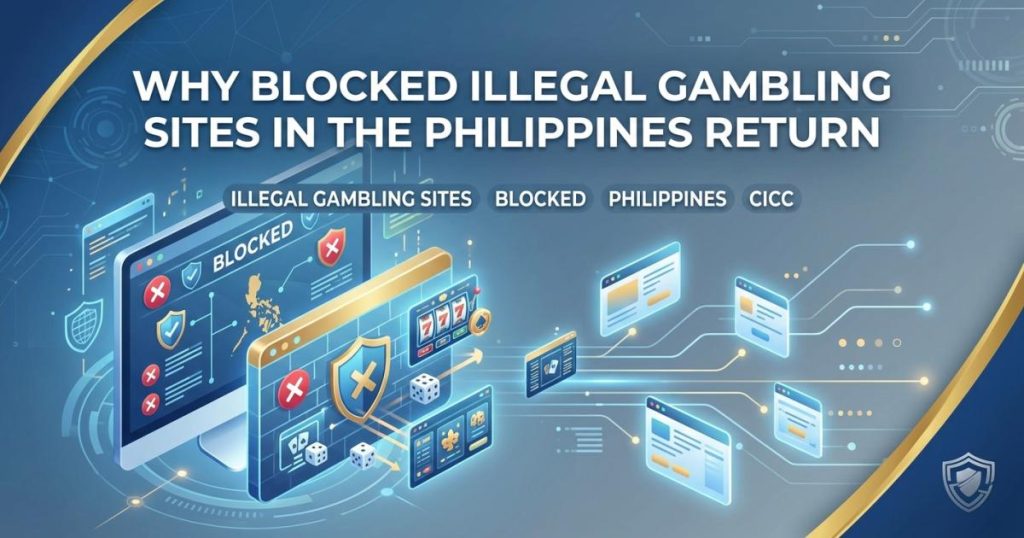
The illegal gambling sites blocked in the Philippines by CICC frequently return under new domain names, making continuous verification essential for players 21+.
CICC Blocks 50,000 Illegal Gambling Sites a Year
Enforcing online gambling regulations in the Philippines remains a complex challenge for regulatory agencies and law enforcement. During a Senate hearing, representatives from the Cybercrime Investigation and Coordinating Center (CICC) disclosed the scale of unauthorized remote gaming operations targeting citizens within the Philippines.
According to CICC’s testimony, the agency blocks an average of 50,000 illegal gambling sites every year. Despite these continuous domain enforcement efforts, illegal operations continue to reach local users through newly created mirrors and redirect networks. Key facts presented during the legislative hearing include:
- Annual Enforcement Volume: The CICC actively coordinates with internet service providers to restrict access to approximately 50,000 unaccredited gambling domains annually.
- Offshore Server Hosting: Between 95% and 97% of these blocked illegal gambling platforms are hosted on servers located outside the territorial jurisdiction of the Philippines.
- Legislative Scrutiny: Senator Win Gatchalian questioned whether domain blocking alone is an effective long-term solution during the Senate hearing, pointing out that illegal operators quickly bypass network blocks.
Because the vast majority of unauthorized platforms reside on international servers, local authorities cannot easily seize the physical infrastructure or arrest the operators. Instead, enforcement efforts rely heavily on URL filtering and domain name system (DNS) blocking, which creates an ongoing battle between regulatory bodies and offshore operators.
Why Blocked Sites Keep Coming Back
Understanding why domain blocking does not permanently shut down illegal operators requires examining how online domain registration works. When the CICC orders local telecommunication companies and internet providers to block access to a specific web address, the restriction only applies to that exact URL or domain name.
Unlicensed operators anticipate these enforcement actions and structure their operations to minimize downtime through several technical practices:
- Automated Domain Generation: Operators register hundreds of alternative top-level domains simultaneously, allowing them to switch active traffic to a backup link within minutes of a domain block.
- Mirror Websites: The underlying website design, user database, and payment channels remain intact on offshore servers while only the visible web address changes.
- Direct Social Media Redirects: Operators use messaging channels and social networks to distribute fresh access links directly to existing users whenever an old link stops functioning.
Because registering a new domain name costs minimal time and effort, an illegal site being blocked once does not mean the operator has ceased operations. The same platform frequently resurfaces under a slightly modified domain name, continuing to target consumers in the Philippines without regulatory oversight.
What This Means for Players
For Filipino players 21 and older, the continuous cycle of domain blocking and domain replacement creates serious safety risks. Relying on search engine availability or memory of previously blocked web addresses is not an effective way to determine whether a platform is legal.
The limitations of a block-based regulatory approach highlight several key considerations for players:
- Temporary Accessibility Does Not Equal Legitimacy: A website being accessible on a mobile network or home connection simply means it has not yet been processed for blocking by the CICC.
- Risk of Counterfeit Platforms: Unregulated sites often replicate the appearance of legitimate platforms, putting unverified users at risk of data theft, unpaid winnings, and financial fraud.
- Importance of Proactive Verification: Rather than assuming an accessible site is permissible, players must actively check regulatory credentials prior to creating an account or depositing funds.
Because domain blocking acts as a reactive measure rather than a complete barrier, direct license confirmation remains the only dependable safeguard for consumers.
How to Verify a Platform Instead of Relying on Blocklists
To avoid unaccredited mirror sites, players in the Philippines must practice direct verification through official regulatory records maintained by the Philippine Amusement and Gaming Corporation (PAGCOR).
Follow these concrete steps to verify any online gaming portal before participation:
- Consult the Official PAGCOR Operator List: Visit the official PAGCOR regulatory portal to access the published, regularly updated list of authorized off-shore and domestic online gaming licensees.
- Cross-Check the Domain Address: Ensure the exact domain string in your web browser matches the approved URL listed on PAGCOR’s public register, paying close attention to subdomains and spelling.
- Confirm Local Licensing Disclosures: Legitimate licensed platforms, such as FBM Play, display clear regulatory information and operate under strict compliance standards established for local gaming safety.
- Inspect Payment and Security Credentials: Verified operators utilize authorized local payment gateways and SSL encryption certificates tied directly to their registered business identity.
Taking a few moments to verify credentials against official PAGCOR records protects players from interacting with offshore domain mirrors that evade local player protection standards.
FAQ
How many illegal gambling sites does CICC block each year in the Philippines?
The CICC told a Senate hearing that it blocks an average of 50,000 illegal gambling sites per year. Between 95% and 97% of these unauthorized websites are hosted on overseas servers.
Why do blocked illegal gambling sites reappear?
Blocked sites reappear because offshore operators can easily register new domain names and point them to their existing server infrastructure. This allows the platform to resume operations under a new web address shortly after an old domain is blocked.
Is blocking illegal gambling sites enough to stop them?
During a Senate hearing, Senator Win Gatchalian questioned if blocking alone is sufficient to eliminate illegal online gambling. Because operators switch domains quickly, domain blocking must be paired with public license verification.
How can I verify a gambling platform instead of relying on a blocklist?
You can verify a platform by cross-checking its exact website address against the list of accredited operators published on the official PAGCOR website. Checking official regulatory listings ensures the domain is legally authorized to operate in the Philippines.
Responsible Gaming Guidelines
Online gaming should always be approached as a form of entertainment, never as a financial strategy or income source. Players must set firm time and budget limits before participating on any licensed platform, such as FBM Play.
Participation in online gaming in the Philippines is strictly limited to individuals 21 years of age and older. If you or someone you know is experiencing gaming-related problems, contact the PAGCOR Helpline at (02) 8248-9568 or seek professional assistance through accredited player support organizations.