
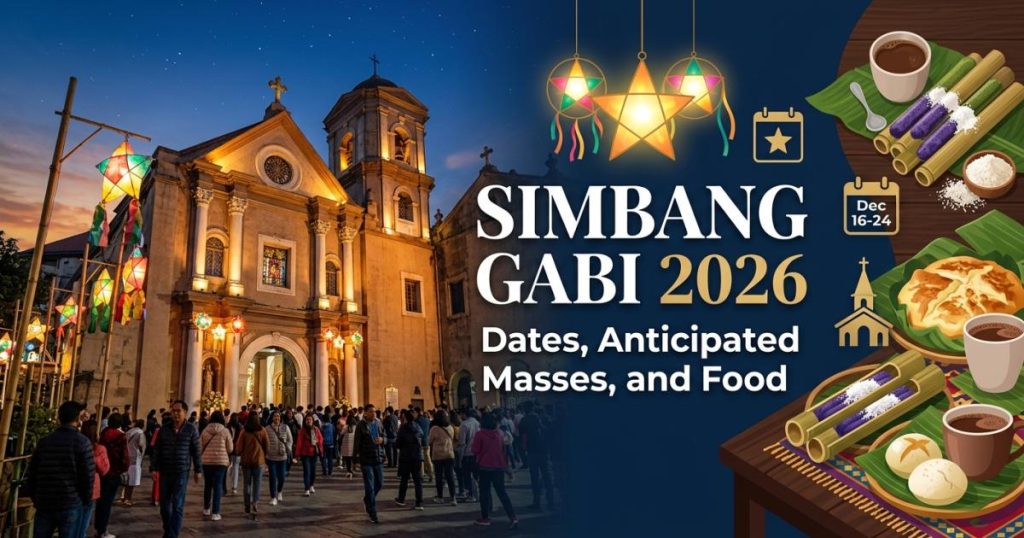
Simbang Gabi 2026 runs December 16–24 as nine before-dawn Masses; this guide covers dates, evening Masses, food, and planning, while FBM Play is PAGCOR-licensed for Philippines players 21+.
The 2026 Dates
The dates are fixed each year from December 16 to December 24, according to the Philippine News Agency and diocesan guides. Simbang Gabi is traditionally held before dawn, with some Masses starting as early as 4 a.m.
| Mass | Date | Day |
|---|---|---|
| 1 | December 16, 2026 | Wednesday |
| 2 | December 17, 2026 | Thursday |
| 3 | December 18, 2026 | Friday |
| 4 | December 19, 2026 | Saturday |
| 5 | December 20, 2026 | Sunday |
| 6 | December 21, 2026 | Monday |
| 7 | December 22, 2026 | Tuesday |
| 8 | December 23, 2026 | Wednesday |
| 9 | December 24, 2026 | Thursday |
Many parishes also hold evening Masses from December 15 to 23, often around 8 p.m. Mass times differ by parish, so check your own parish for the local simbang gabi schedule and ask how evening Masses are counted.
What Simbang Gabi Means
The name Simbang Gabi is Tagalog for “Night Mass.” It is a nine-day novena, or nine consecutive Masses, held in preparation for Christmas.
According to diocesan guides, the dawn Masses began so farmers and fishermen could attend before starting their day’s work. For many families, the tradition remains a shared act of prayer that brings relatives and neighbors together.
According to Filipino belief, completing all nine Masses is said to let a person make a wish, as reported by the Philippine News Agency. It is a personal tradition of faith and hope, not a guarantee that a wish will be granted.
Misa de Gallo
Misa de Gallo means “Rooster’s Mass.” In many places, the term refers to the last Mass on December 24, and it is also used for the whole series.
Misa de Aguinaldo, meaning “gift Mass,” is another name for the series. Practice for the ninth Mass varies by parish, so check with your own parish about its arrangements.
Food After Mass
After Mass, many churches have stalls outside serving familiar holiday treats. Bibingka is a rice cake cooked above and below, while puto bumbong is a steamed purple rice pastry served with butter, grated coconut, and brown sugar.
These are often enjoyed with tsokolate, or hot chocolate, and salabat, or ginger tea. This simple meal shared after worship is the simbang gabi food many people look forward to each December.
Planning Tips
- Choose a service: Select dawn or evening Masses that fit your schedule, then ask your parish about its official schedule and how the services are counted.
- Prepare for the weather: Dress appropriately and bring only what you need for the service.
- Carry essentials: Bring a small amount of cash for food stalls, and keep bags and phones close in crowds.
- Note the holidays: December 24 is a special non-working day and December 25 is a holiday, so the ninth Mass falls at the start of the long break.
- Plan holiday spending: Christmas is also a time of spending, so decide your holiday budget before the 13th month pay arrives.
- Plan other outings separately: Christmas light displays are another seasonal activity to consider after organizing your Mass schedule.
A parish’s timetable may differ from another parish’s timetable. Confirm the date, service time, and local guidance directly with your own parish, especially if you are planning to attend all nine Masses.
FAQ
What are the dates of Simbang Gabi 2026?
Simbang Gabi 2026 runs from December 16 through December 24, with one Mass date for each of the nine consecutive days.
What is Simbang Gabi?
Simbang Gabi is a nine-day novena of Masses in preparation for Christmas, traditionally celebrated before dawn.
What is the difference between Simbang Gabi and Misa de Gallo?
Misa de Gallo means “Rooster’s Mass” and may refer to the December 24 Mass or the whole series. Misa de Aguinaldo, or “gift Mass,” is another name for the series.
What time is Simbang Gabi?
It is traditionally held before dawn, with some Masses starting as early as 4 a.m.; many parishes also hold evening Masses, so check your parish.
Do evening Masses count as Simbang Gabi?
Many parishes hold evening Masses from December 15 to 23. Ask your parish how those services are counted toward the nine Masses.
What food is served after Simbang Gabi?
Common offerings include bibingka, puto bumbong, tsokolate, and salabat. Many churches have stalls outside after Mass.
Why do people complete the nine Masses?
According to Filipino belief, completing all nine Masses lets a person make a wish. It is a tradition of faith and hope, not a promise that a wish will be granted.
Gaming is for players 21+ and is entertainment that costs money. Set limits first; the National Problem Gambling Helpline, (02) 8248-9568, is open 24/7. FBM Play information is available at fbmplay.com.