

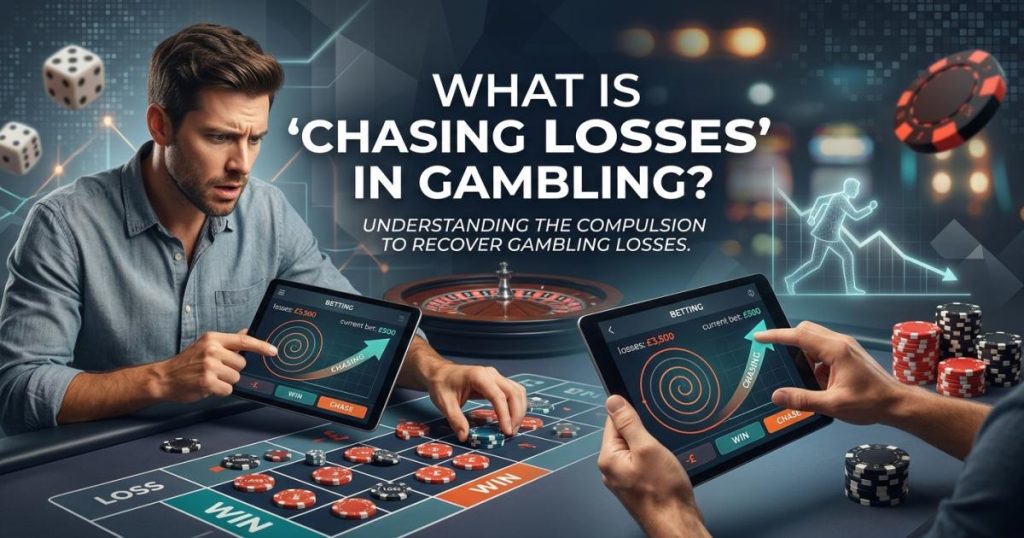
Chasing losses in gambling occurs when a player increases bets or continues playing specifically to recover lost money, serving as a key pattern worth recognizing in casino gaming.
Understanding psychological patterns in gaming helps individuals maintain healthy habits and make informed decisions. This educational guide explains what this specific behavior entails and how to recognize it safely, tailored for Filipino players aged 21+ who participate on PAGCOR-regulated platforms such as FBM Play in the Philippines.
What Chasing Losses Actually Means
At its core, chasing losses means continuing to bet, often at increasing amounts, specifically to try to win back money already lost — rather than playing for entertainment within a pre-determined budget. Chasing losses means betting more specifically to win back money already lost, not just continuing to play.
It is crucial to distinguish this pattern from simply continuing a gaming session after experiencing a loss. In standard recreational play, a person sets a fixed entertainment budget and accepts that losses are a normal possibility. When the budget is depleted, the recreational player stops. In contrast, the key marker of chasing losses is a shift in motivation: the primary driver becomes the urgency to erase previous negative balances rather than enjoying the gameplay mechanics itself.
When someone enters this mindset, decision-making often shifts from deliberate and analytical to reactive and emotional. Instead of sticking to established boundaries, the participant focuses entirely on trying to reach a break-even point. Recognizing this subtle psychological pivot is the first step toward maintaining self-awareness and control during any gaming session.
Why This Pattern Is Risky
Chasing losses poses significant risks because it directly contradicts the mathematical realities of casino games. Every spin of a slot wheel, roll of dice, or deal of cards operates as an entirely independent event. A common cognitive misconception known as the gambler’s fallacy leads people to believe that a prolonged losing streak makes a win “due.” In reality, past outcomes have zero influence on future probability.
Because each bet is independent, increasing bet sizes to compensate for earlier losses does not alter the underlying odds of the game. Instead, escalating wager sizes during a cold streak rapidly accelerates bankroll depletion. What might have started as a manageable, budgeted recreational expense can quickly multiply into significant financial strain.
Beyond the financial impact, this behavior generates considerable emotional turmoil. Expecting a single win to resolve accumulated losses creates intense pressure, which frequently results in frustration and compromised decision-making. For these reasons, this pattern is one of the clearest, most commonly cited early signs of problem gambling in academic and clinical literature.
Common Situations Where This Shows Up
Recognizing how this behavior manifests in real-world scenarios makes it easier to spot before it impacts an individual’s wellbeing. Common observable indicators include:
- Increasing Bet Sizes: Raising wager amounts immediately following a losing round specifically to recover lost funds in a shorter timeframe.
- Reallocating Essential Funds: Using money set aside for household expenses, savings, or other personal priorities to continue playing after exceeding an initial session budget.
- Extended Session Duration: Overriding pre-planned departure times due to feeling unable to stop playing until all losses are fully recovered.
- Emotional Urgency: Experiencing heightened agitation or compulsive urges to place immediate wagers right after experiencing a major loss.
What Helps Break This Pattern
Interrupting the urge to chase losses involves establishing strong structure before placing a single bet. Implementing proactive habits helps ensure that decisions remain grounded in logic rather than emotional reactions:
- Setting Pre-Commitment Loss Limits: Establishing a strict loss threshold before starting play ensures the decision to stop is made in advance, not in the emotional heat of the moment. Utilizing built-in FBM Play loss limits enforces these boundaries automatically.
- Reframing Spent Funds as Entertainment Costs: Treating a session’s allocated budget as fully spent the moment it is transferred to the game, similar to buying a cinema ticket, removes the expectation that money must be “recovered.”
- Taking Mandatory Cool-Off Breaks: Stepping away from the device or gaming area immediately following a loss helps reset emotional levels and clears the mind before evaluating whether to continue.
- Utilizing Platform Safety Controls: Leveraging automated tools such as reality checks, deposit caps, and self-exclusion features on licensed platforms provides objective safeguards against emotional overspending.
Where to Get Support
If you or someone you know wants to learn more about responsible play or needs professional guidance on managing gambling habits in the Philippines, help is readily accessible:
- National Problem Gambling Helpline (NPGH): Call (02) 8248-9568 for free, confidential, 24/7 assistance provided by trained professionals.
- Responsible Gaming Guides: Review FBM Play’s dedicated guide to signs of problem gambling to gain a fuller picture of healthy gaming boundaries and available self-help tools.

FAQ
What does “chasing losses” mean in gambling?
Chasing losses in gambling refers to continuing to play or increasing wager sizes specifically to win back money already lost. It reflects a shift from playing for entertainment to wagering out of an urgent desire to recover funds.
Why is chasing losses considered risky?
It is risky because every bet is an independent event, meaning prior losses do not make a win any more likely. Increasing wager amounts to cover past losses often leads to rapid depletion of funds and emotional stress.
Does a losing streak mean a win is more likely next?
No, a losing streak does not increase the probability of a win on subsequent bets. Modern regulated games use random number generators to ensure that every outcome is entirely independent of previous results.
What tools can help prevent chasing losses?
Setting pre-commitment loss limits, session time caps, and deposit boundaries helps keep gaming within safe parameters. Automated responsible gaming controls on platforms like FBM Play enforce these limits before emotional decisions occur.
Responsible Gaming Reminder: Gaming should always remain a controlled form of entertainment, never a source of income or financial recovery. This resource is intended exclusively for players aged 21 and above in the Philippines. FBM Play operates under strict regulatory oversight from PAGCOR. If you ever feel your gaming habits are becoming difficult to manage, please reach out to the National Problem Gambling Helpline at (02) 8248-9568 for confidential support.