
Recognizing the early signs of problem gambling philippines players might experience is a proactive way to keep entertainment safe and enjoyable.
Most people in the Philippines gamble purely for entertainment, but it helps to know the early signs in yourself or someone close to you. This guide outlines what to watch for, providing relevant information for Filipino players 21+ on PAGCOR-licensed platforms like FBM Play.
Common Signs Worth Noticing
Understanding your own habits is a key part of maintaining balance. The following patterns are not a diagnostic checklist, but rather factual behaviors that are worth noticing if they begin to occur regularly. Recognizing these shifts early can help you make informed decisions about your play.
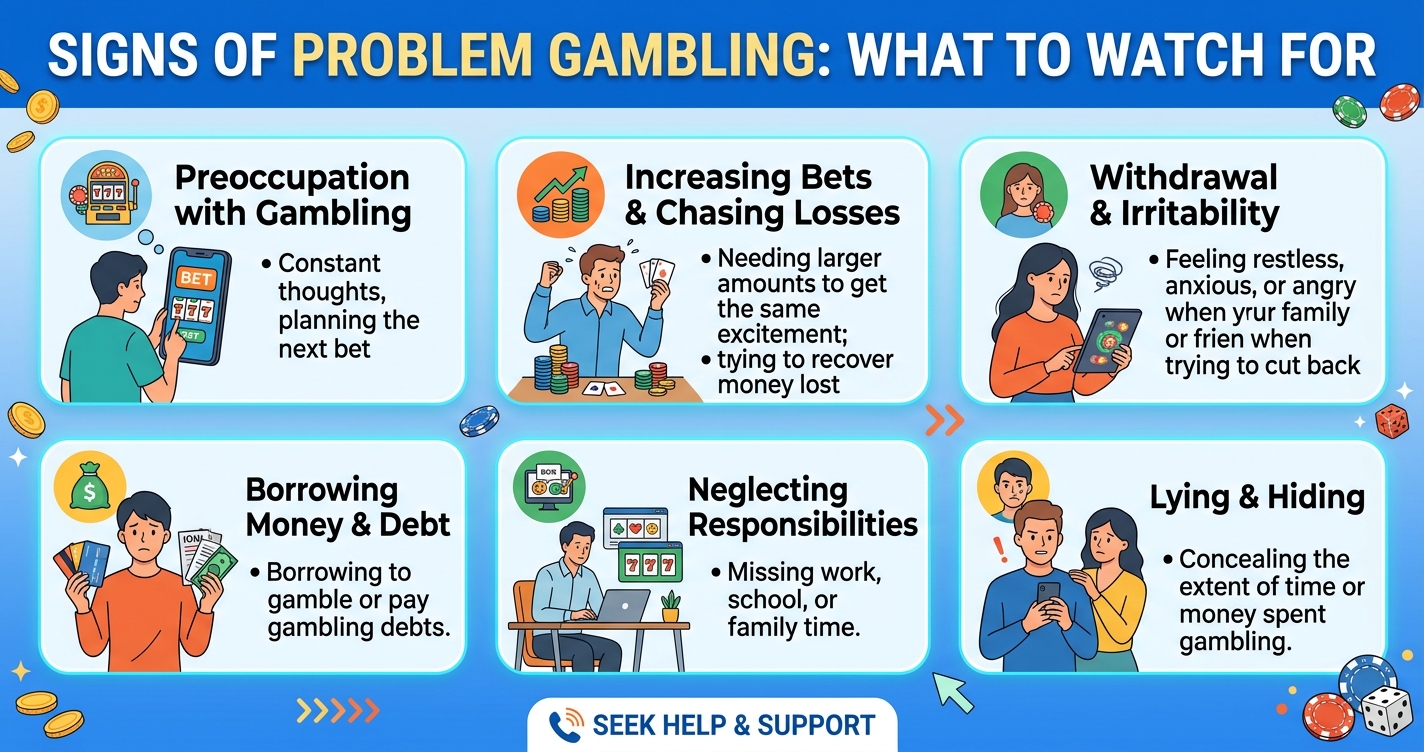
- Exceeding Time and Money Limits: Spending more money or time gambling than originally planned, repeatedly, is a common early indicator. What starts as a set budget or a brief session may frequently extend beyond those initial boundaries, leading to unexpected expenses.
- Chasing Losses: This refers to gambling more to try to win back what was lost. Instead of accepting a loss as the cost of entertainment, a person might feel compelled to keep playing to break even, which often leads to further financial strain.
- Mood Shifts When Pausing: Feeling restless, irritable, or anxious when trying to cut back or stop is another pattern to observe. If taking a break from gaming causes noticeable frustration or shifts in your daily mood, it is worth reflecting on.
- Concealing the Activity: Hiding gambling activity, spending, or losses from family or friends often indicates that a person feels uncomfortable with the extent of their play. This might involve being secretive about screen time, hiding bank statements, or downplaying the frequency of gaming sessions.
- Borrowing Funds: Borrowing money specifically to keep gambling is a significant financial shift. Relying on loans, credit cards, or borrowing from loved ones to fund play changes the nature of the activity from casual entertainment to a financial burden.
- Impact on Daily Life: Notice if gambling is starting to affect work, school, relationships, or daily responsibilities. When gaming begins to replace important personal or professional commitments, it is a clear sign to evaluate the habit and consider adjustments.
These Signs Apply to Loved Ones Too
These patterns are worth watching for in people close to you, not just yourself. It is common for family members or friends to notice shifts in behavior, time management, or financial habits before the individual fully recognizes them. Observing these changes can be an important first step in offering help.
Noticing several of these in someone you care about is a reasonable starting point for a supportive conversation, not an accusation. If you observe a loved one frequently hiding their screen, expressing frustration when away from gaming, or borrowing money without clear reasons, it may be helpful to check in with them. Approaching the topic calmly, choosing a quiet moment to talk, and expressing care can create a safe space for them to open up about their experiences without feeling judged.
What to Do If Any of This Sounds Familiar
Reaching out doesn’t require certainty — a conversation with a trained counselor can help clarify what’s going on. You do not need to have all the answers or fit a specific profile to ask for guidance. Sometimes, simply talking through your habits with a neutral professional can provide valuable perspective and help you establish healthier boundaries.
The National Problem Gambling Helpline is available at (02) 8248-9568. This service is available 24/7 and is completely confidential, offering a safe environment to discuss your concerns. Additionally, if more structured support is needed, see FBM Play’s dedicated guide on PAGCOR’s accredited treatment centers for direct contacts and detailed facility information. Reaching out is a positive, proactive step toward maintaining control.
Tools Available If You Want More Control
Taking proactive steps to manage your play is entirely normal and encouraged. Various features are designed to help players maintain their boundaries and keep gaming an enjoyable pastime rather than a source of stress.
Self-exclusion, betting limits, loss limits, and session time limits are available on PAGCOR-licensed platforms, including FBM Play. These tools allow you to set strict parameters on your account before you start playing, removing the need to rely solely on willpower in the moment. By setting a loss limit, for example, your session will automatically pause once a specific threshold is reached. For specific instructions on how to activate and manage these settings, see FBM Play’s dedicated responsible gambling tools guide for details.
FAQ
What are common early signs of problem gambling?
Common early patterns include spending more time or money than intended, chasing losses, and hiding gambling activities from others. These are simply behaviors worth noticing to help maintain control.
Do these signs mean someone definitely has a gambling problem?
No, noticing these patterns does not serve as a clinical diagnosis. They are simply indicators that it might be a good time to evaluate habits or have a supportive conversation.
What should I do if I notice these signs in myself?
Consider reaching out to a confidential resource like the National Problem Gambling Helpline to discuss your experiences. You can also explore responsible gambling tools like deposit limits or session timers to help manage your activity.
How can I get help for a family member who may be struggling?
Approach them calmly and express your care without making accusations. You can also contact professional support services to ask for guidance on how to have a constructive, supportive conversation.
Playing Safely and Responsibly
Maintaining a healthy relationship with gaming means staying informed and being honest about your habits. Remember that gambling is strictly for individuals who are 21+ and should always remain a form of entertainment. If you or someone you know is finding it difficult to manage their play, support is readily accessible. We encourage you to reach out to the PAGCOR Helpline at (02) 8248-9568 for confidential guidance at any time.