

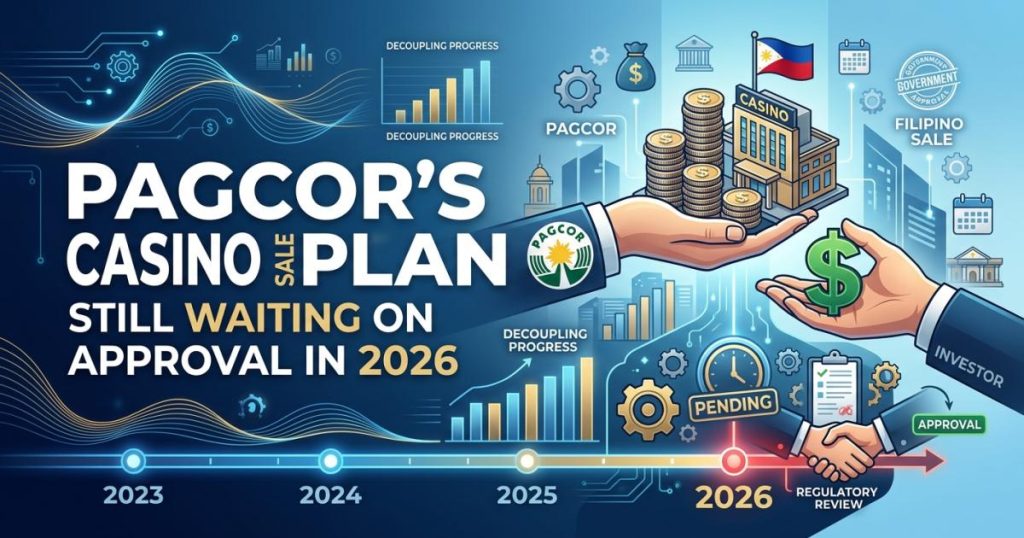
In the Philippines, PAGCOR‘s decoupling and Casino Filipino sale plan remains pending approval as of mid-2026, while 21+ platforms like FBM Play await a late 2026 target.
What “Decoupling” Means
The Philippine Amusement and Gaming Corporation (PAGCOR) has operated under a unique dual mandate for decades, acting as both the primary regulator for the nation’s commercial gaming sector and a direct operator of state-owned casinos. This dual role has long drawn criticism from lawmakers, private operators, and international observers who point out the inherent conflict of interest. To resolve this, PAGCOR proposed a strategic shift termed “decoupling.” Under this framework, the agency would exit direct casino operations entirely. Instead of running its own gaming floors, PAGCOR would transition into a purely regulatory body. Its daily functions would focus strictly on issuing licenses, monitoring compliance, and collecting regulatory fees from private operators.
This structural reform represents a major shift in Philippine economic policy. For years, Casino Filipino branches have been significant contributors to state coffers, funding various socio-civic projects. By decoupling, the government aims to level the playing field. Private operators will no longer have to compete against state-owned venues regulated by the same state entity.
- Regulatory Focus: The agency will dedicate all resources to oversight, taxation, and licensing enforcement.
- Asset Divestment: The state will sell off all physical Casino Filipino properties to private entities.
- Market Equity: Eliminating the conflict of interest creates a standard, unbiased regulatory environment for all industry participants.
Where the Plan Stands as of Mid-2026
Despite the clear intent to privatize, the pagcor decoupling casino filipino sale process remains an unresolved regulatory initiative. As of July 2026, the official recommendation to decouple was still working its way through the government’s administrative pipeline. The Governance Commission for GOCCs (GCG) is currently conducting a comprehensive review of the privatization framework. The GCG is tasked with ensuring that the disposal of government assets aligns with national interests and yields fair market value. Once the GCG completes this evaluation, the formal recommendation is expected to reach the Office of the President by August 2026.
PAGCOR Chairman Alejandro Tengco has publicly emphasized that all current dates are strictly targets, rather than guaranteed milestones. The entire privatization effort requires explicit presidential approval before any bidding or transfer of assets can occur. Because the process involves state-owned assets and thousands of government employees, the administrative review is extensive, and officials acknowledge that further delays remain a distinct possibility. The timeline is highly dependent on how quickly the executive branch processes the GCG’s findings.
A History of Delays
The timeline for the Casino Filipino privatization has shifted multiple times since the initiative was first announced. Initially, industry analysts and state officials targeted mid-2025 for the commencement of the bidding process. However, logistical hurdles and legal requirements quickly pushed the target to early 2026. As of the latest updates in mid-2026, the target has been adjusted again. As a matter of public record, PAGCOR’s Casino Filipino sale, delayed multiple times, is now targeted for late 2026 or early 2027.
A primary reason for these repeated delays is the legal foundation of the agency itself. PAGCOR has stated that it must first amend its legislative charter before the sale can legally proceed. The current charter explicitly mandates the agency to generate revenue through direct operations. Amending this charter requires congressional action, which involves multiple readings in both the House of Representatives and the Senate, followed by a bicameral committee review. This legislative prerequisite adds a significant layer of complexity to the privatization effort.
- Initial Target: Mid-2025, based on preliminary privatization announcements.
- First Revision: Early 2026, due to initial legal and logistical assessments requiring more time.
- Current Target: Late 2026 or early 2027, pending GCG review, presidential approval, and necessary charter amendments.
What’s Happening in the Meantime
While waiting for the necessary approvals to proceed with the pagcor decoupling casino filipino sale, the agency is not leaving its properties dormant. PAGCOR has initiated a comprehensive modernization program across its Casino Filipino venues. The goal is to increase the overall valuation of these properties ahead of the eventual public bidding. This modernization effort includes the installation of thousands of new slot machines and the upgrading of casino management systems to bring the state-run venues closer to private-sector standards. By improving the physical assets and operational software, the agency aims to secure higher bids from prospective buyers.
Simultaneously, the agency is actively managing operational costs by evaluating the profitability of its existing branches. Several underperforming Casino Filipino locations have already been permanently shut down. Notably, the branches in Talisay and Tagum were closed as part of this broader cost-management strategy. To minimize the impact on the workforce, staff members from these closed locations have been reassigned to other active branches, ensuring that operational efficiency is maintained without immediate job losses during the transition period.
- Hardware Upgrades: Deployment of modern gaming cabinets and updated slot machines to attract higher privatization bids.
- System Modernization: Implementation of newer casino management software to streamline operations.
- Branch Consolidation: Closure of unprofitable venues, specifically citing the Talisay and Tagum branches.
- Workforce Management: Reallocating employees from closed branches to active locations to preserve jobs.
The Expected Financial Impact
The financial implications of the decoupling process are substantial for the Philippine government. Chairman Tengco has estimated that the successful privatization of the roughly 40 Casino Filipino properties could generate between ₱30 billion and ₱50 billion in one-time revenue for the state. This valuation is based on the physical assets, existing customer bases, and the strategic locations of the venues across the country. The injection of these funds is expected to be remitted to the national treasury to support various government initiatives.
Beyond the initial windfall from the sale, the decoupling will fundamentally alter PAGCOR’s long-term revenue structure. Historically, a significant portion of the agency’s income was derived from direct gaming operations. Once the sale is complete, the agency’s revenue stream will shift almost entirely to licensing fees, regulatory taxes, and revenue-sharing agreements with private operators. Financial analysts note that a purely regulatory framework will eliminate the massive overhead costs associated with running physical casinos, potentially leading to a more efficient and predictable income model for the state.
FAQ
What is PAGCOR’s decoupling plan?
The decoupling plan is a strategic initiative for PAGCOR to exit direct casino operations and become a purely regulatory body. This means the agency will sell its state-owned casinos to focus entirely on issuing licenses and overseeing the Philippine gaming industry.
Has PAGCOR started selling Casino Filipino properties yet?
No, the sale has not yet begun as the process remains pending government review as of mid-2026. The agency is currently waiting for approval from the Governance Commission for GOCCs and the Office of the President.
When is the Casino Filipino sale now expected to happen?
The privatization is currently targeted for late 2026 or early 2027. This timeline remains an estimate, as the agency must still amend its charter and secure final presidential approval.
Does this affect online platforms like FBM Play?
The physical casino sale primarily impacts land-based operations rather than established online regulatory frameworks. Regulated digital platforms like FBM Play will continue to operate under PAGCOR’s licensing and oversight mandate.
Disclaimer: The Philippine gaming industry is strictly regulated. Participation in any gaming activities, including digital platforms like FBM Play, is limited to individuals who are 21 years of age or older. Always practice responsible gaming.