
The ongoing discussion regarding PAGCOR registered vs active players was clarified today by Chairman Alejandro Tengco,
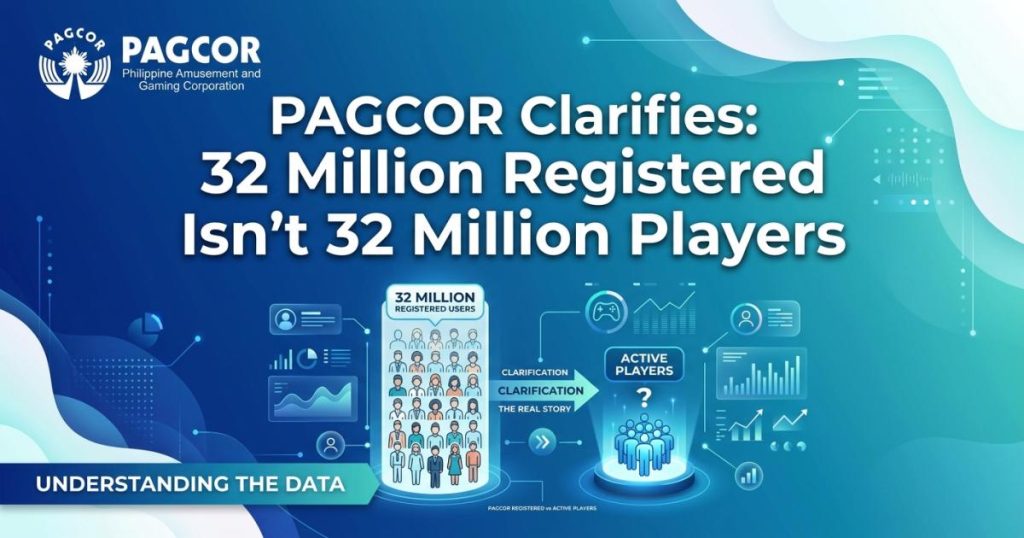
who confirmed the Philippines has 32 million accounts but only 10 million actual users.
This critical data gives Filipino players 21+ and operators more accurate context on the real size of the online gaming market.
Platforms like FBM Play operate within this regulated environment, where understanding true player volume is essential for industry transparency and compliance.
The Clarification Tengco Made
During a recent industry address, PAGCOR Chairman Alejandro Tengco addressed a specific data point that has circulated widely in gaming reports.
He noted that the often-cited figure of 32 million represents registered user accounts across all licensed platforms, rather than individual human beings actively participating in the market.
To set the record straight, PAGCOR clarified that only about 10 million of its 32 million registered accounts are active players.
This clarification is critical for understanding the landscape of the Philippine gaming sector. For years, aggregate database metrics have been used to gauge market penetration.
When every licensed operator reports their total historical account registrations, the cumulative number naturally inflates. An operator’s database does not automatically delete an account just because the user stops logging in.
Therefore, the 32 million figure is essentially a historical tally of every account creation event since accurate digital record-keeping began under the current regulatory framework.
Tengco’s statement shifts the focus from gross registrations to actual monthly or yearly active users. By reducing the effective market size down to approximately 10 million active participants, the regulatory body provides a grounded, realistic assessment of the industry. This factual correction prevents market analysts, operators, and policymakers from operating on the assumption that nearly a third of the country’s population is actively gambling online.
Why the Numbers Don’t Match
The gap between 32 million registrations and 10 million active users comes down to standard consumer behavior within the online gaming ecosystem. Tengco explained that regular gamblers frequently register more than one account across different operators. The online gaming market offers numerous platforms, each with different interfaces, promotional structures, and game libraries.
To understand this discrepancy, it helps to look at the specific habits that drive multiple account creations:
- Testing Platform Luck: His explanation highlighted a common behavioral trend among players. Individuals who get lucky on one platform tend to stick with it, viewing that specific site as favorable for their ongoing sessions.
- Abandoning Losing Accounts: Conversely, those who lose tend to switch to another platform. Instead of continuing to deposit funds into an account where they have experienced a losing streak, players prefer to start fresh elsewhere.
- Exploring New Operators: The continuous entry of newly licensed operators means players are always creating new accounts to explore different options, leaving their older accounts dormant.
- Multiple Registrations: This cycle of registering, testing, and abandoning leads many individuals to hold multiple registered accounts across the industry.
A single active player could easily be responsible for three, four, or even five separate database entries. When this behavior is multiplied by millions of users over several years, the total registration count quickly eclipses the actual number of human beings participating in the market.
Why This Distinction Matters
Understanding the true active user base is not just a matter of statistical accuracy; it has real-world implications for how the industry is managed and evaluated. Registered accounts alone can overstate the true size of the active online gambling population, creating a distorted view of the sector’s economic footprint.
A more accurate active-player figure gives a clearer picture of the market’s real scale, useful when evaluating industry trends and revenue figures. Here is why this data correction is essential:
- Accurate Revenue Analysis: When analysts calculate metrics like Average Revenue Per User, using the inflated 32 million figure results in artificially low numbers. Using the accurate 10 million figure allows for a correct assessment of player spending habits and market health.
- Resource Allocation: Operators need to know the true size of the addressable market to scale their customer service, server capacity, and responsible gaming interventions appropriately. Overestimating the market can lead to overinvestment in infrastructure.
- Policy and Regulation: For lawmakers and regulators, knowing that the active player base is 10 million rather than 32 million changes the approach to public health and social policy. It correctly sizes the demographic that requires regulatory protection and oversight.
By defining the market accurately, the regulatory agency ensures that all stakeholders are making decisions based on reality rather than inflated historical data.
This Comes Alongside Other Regulatory Moves
The clarification regarding player numbers is not an isolated event. It arrives during a period of significant regulatory restructuring by the Philippine Amusement and Gaming Corporation. The agency is currently reviewing and updating several core policies that govern how licensed platforms operate, market themselves, and process financial transactions.
These simultaneous regulatory moves include:
- Potential Ban on Advertising: PAGCOR is simultaneously considering a total ban on iGaming ads. This proposed restriction aims to limit the public exposure of gambling promotions, focusing on protecting vulnerable demographics from aggressive marketing campaigns.
- Tightening Identity Verification: The regulator is tightening KYC rules further. Enhanced Know Your Customer procedures mean that creating an account will require more rigorous identity checks. This move is expected to reduce the creation of duplicate accounts and prevent underage access.
- Restoring Payment Channels: It is also lobbying the central bank (BSP) to restore e-wallet links to licensed gambling platforms, which were removed in August 2025. The removal of these direct links created significant friction for players trying to deposit and withdraw funds. By working with the BSP, the gaming regulator hopes to re-establish secure payment gateways that operate under strict financial oversight.
These combined efforts illustrate a regulatory body that is actively working to mature the market. By clarifying data, tightening compliance, and advocating for secure financial infrastructure, the agency is shaping a more controlled and transparent gaming environment.
FAQ
How many registered online gambling accounts does the Philippines have?
The Philippines currently has approximately 32 million registered online gambling accounts across all licensed platforms. However, this figure represents total database entries rather than individual, unique players.
How many active online gambling players are there really?
According to PAGCOR Chairman Alejandro Tengco, the actual number of active online gambling players is closer to 10 million. The remaining millions of accounts are largely inactive, abandoned, or duplicates.
Why do the registered and active player numbers differ so much?
Players frequently open multiple accounts across different operators, often sticking with platforms where they win and abandoning those where they lose. This behavior results in a single person holding multiple registered accounts, inflating the total number.
Is FBM Play part of PAGCOR’s licensed platform ecosystem?
Yes, FBM Play operates within the regulated Philippine gaming market overseen by the national regulatory body. All licensed platforms must adhere to the agency’s data reporting and compliance standards.
Responsible Gaming Reminder: Online gaming is intended for entertainment purposes only. Players must be 21+ to participate in legal online gambling in the Philippines. If you or someone you know is struggling with gaming-related issues, please seek professional help and utilize responsible gaming tools provided by licensed operators.